
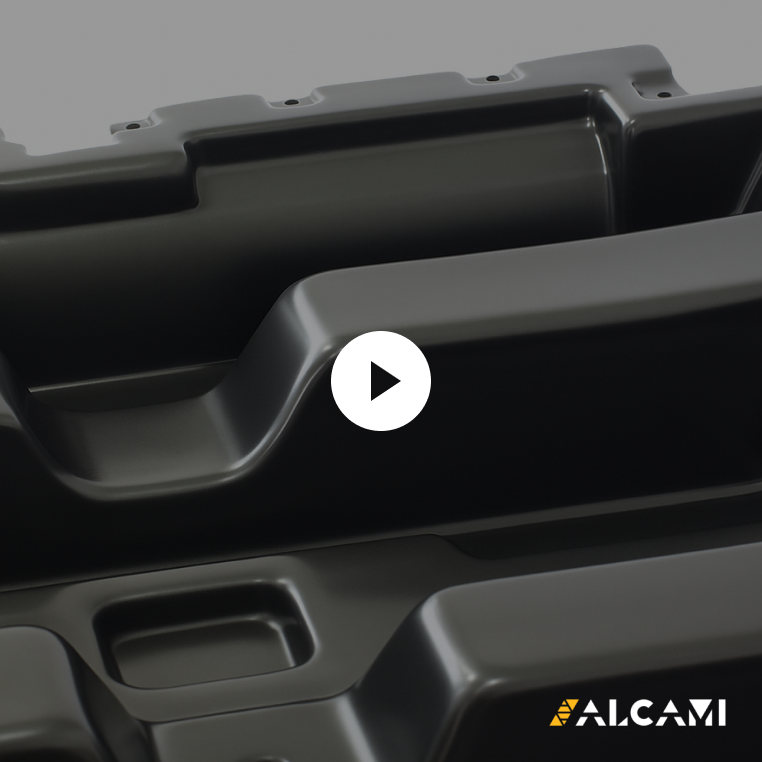
Plastic Thermoforming
- Plastic packaging
- High-precision components
Certified For Food Safety And Medical Devices
How It Works
- An engineer designs a CAD model for the part.
- From the model a mold will be fabricated that can be used to accurately form your desired part. Alcami engineers can assist with the design and creation of your mold.
- Once a proper mold has been developed and tested for quality, manufacturing can begin for as many parts as your job requires.
Helping You Through Each Step
Alcami engineers are available to assist in realizing any of your project ideas. We offer expert design consultation and a variety of mold fabrication options, providing you with a turnkey solution for all your production needs.
The Thermoforming Process
Alcami uses vacuum and pressure forming technology for its thermoforming work. A single cycle of the thermoforming process involves the following steps.
- First, the sheet of plastic undergoes a heating process and is moved in position over molding elements.
- When the heated material is in position, it is stretched against the mold using either vacuum or pressure centered techniques to form the desired shape.
- After the material has fully formed around the mold and been given time to cool, demolding air ejects the parts from the mold. A new round of material can then be moved into position for molding.
- Once molded material is ejected from the mold, it is trimmed and individual parts are removed from the sheet of material as necessary.
Cleanroom Production
Alcami is an ISO 9001 certified company and provides cleanroom production for this manufacturing process to ensure maximum quality products and optimal sanitation standards. Be sure to contact us to learn more about how we can help you meet your unique production requirements.
MOQ – Minimum Order Quantity
MOQs are variable by the scope and complexity of the parts you need manufactured. Volumes for food product packaging are obviously higher than for airplane parts… 🙂
Benefits Of Thermoforming
Excellent for Mass Production
Similar to injection molding, thermoforming allows a large number of parts to be produced using a single mold, so it is an excellent method for manufacturing identical parts in high volumes.
The largest costs incurred are during the beginning stages of production when designing and fabricating your mold. After this, the cost per part produced is very low.
Low Scrap Rates
The thermoforming process is highly sustainable and results in very little post-production scrap. The leftover plastic from the initial sheet of material can typically be reground and recycled in future processes.
As an ISO 9001, 14001, 22000 certified company, Alcami is dedicated to reducing its environmental footprint and promoting sustainability and efficiency throughout all its production processes.
Detailed Design Capabilities
Thermoforming allows a great deal of detail to be imprinted on parts. Additionally, the manufacturing process leaves room for design freedom, making thermoforming a great production method for a wide variety of parts and products.
Automation Tray
One of our customers has been investing in automation equipment to automate their production line. This automation will increase their output with 20%, using less operators.
Scraperite
Established and patented in 2004, the Scraperite brand is a line of plastic razor blades and holders developed for cleaning and scraping on surfaces where metal scrapers and blades would cause damage.
FAQ
What is the thermoforming process like at Alcami?
At Alcami we advise you through every step of your production process. If you choose thermoforming for your project, there are a few stages of production that we will guide you through:
- An engineer designs a CAD model for the part.
- From the model a mould will be fabricated that can be used to accurately form your desired part. Alcami engineers can assist with the design and creation of your mould.
- Once a proper mould has been created and tested for quality, manufacturing can begin for as many parts as your job requires.
Alcami can help provide you with engineering assistance to bring to life your design ideas or provide the knowledge and expertise to counsel your internal engineers on creating operable designs for Alcami machines.
We offer expert design consultation and a variety of mould fabrication options, providing you with a turnkey solution for all your production needs.
What materials can be used for thermoforming?
Thermoforming is most frequently used to shape various plastic materials. Some newer thermoforming processes are also able to work with glass as a material option.
Alcami works with most standard polymer materials, including…
- Amorphous Polyethylene Terephthalate (APET)
- Polystyrene (PS)
- Polypropylene (PP)
- High Density Polyethylene (HDPE)
- Polycarbonate (PC)
In addition to the above plastics, Alcami is able to thermoform specialty materials for specific projects. This includes sustainable materials such as bio-based, biodegradable, and recyclable plastics. We are on the cutting edge of sustainable manufacturing practices and are dedicated to ensuring that our work supports a healthier planet.
Whatever your thermoforming project, our engineering team can help you look at the best material options and design strategies to provide you with the highest quality product possible.
Does Alcami extrude sheets of material in-house?
What are the main applications of thermoforming?
Alcami primarily uses thermoforming to produce a wide range of packing materials. We are also able to use manufacturing for various high precision parts.
Contact our Alcami engineering team if you are wondering whether thermoforming is a good option for your project. We offer expert advising on our many manufacturing methods and which approaches will work best for your design and production specifications.
Does Alcami provide thick or thin gauge thermoforming services?
We provide both, but the majority of our business involves thin gauge thermoforming.
Does Alcami use vacuum formers or pressure formers?
Alcami uses both vacuum and pressure formers. Vacuum formers are primarily used for small series jobs, prototyping and large dimension parts, but 90% of our thermoformed products are manufactured using pressure forming machines.
What are the production cleanroom standards at Alcami?
Alcami undertakes thermoforming production in class 10K/ISO7 cleanrooms and can provide washed trays in class 100/ISO9.
Alcami is dedicated to the highest level of quality assurance in all of our production work. As an ISO 9001 certified company, cleanroom production is an essential part of our guarantee to provide optimal sanitation and quality standards for any project.
We are able to certify quality and cleanliness in manufacturing parts for a wide range of industries, including…
- Plastic packaging
- Electronic part production
- Food manufacturing
- Biotechnology and medical equipment
